Aligning Momentum Streaks from Consecutive Home Stands in Pro Basketball with Parallel Runs in Hockey to Sharpen Selections for Layered Daily Accumulators
Clara Neumann · Aug 18, 2026

Aligning Momentum Streaks from Consecutive Home Stands in Pro Basketball with Parallel Runs in Hockey to Sharpen Selections for Layered Daily Accumulators
Professional basketball teams build extended home stands that produce measurable momentum patterns, while hockey squads generate comparable run sequences during home-heavy stretches, and analysts track these alignments to refine daily accumulator selections across both sports.
Documented Patterns in Basketball Home Stands
League data shows NBA clubs posting win rates above 60 percent during three-game home stands, with the figure climbing when teams enter those stretches after road victories, according to figures from the NBA statistics database. Observers note that consecutive home dates often coincide with elevated scoring outputs and improved defensive efficiency, particularly in the first and third quarters where transition play accelerates.
Those who study schedule density find that back-to-back home games within the same stand amplify these effects, because rest advantages compound and crowd energy sustains higher effort levels through the final minutes. Research indicates that teams completing four-game home stands without interruption carry elevated point differentials into the next road trip, creating measurable carryover that bettors monitor for layered wagers.
Corresponding Runs in Professional Hockey
NHL clubs exhibit parallel run behavior during multi-game home sequences, where point percentages rise steadily across three or four consecutive home dates. Data compiled by Canadian sports analytics groups reveals that teams winning at least two of their first three home games in a stand extend that success in the fourth contest at rates exceeding league averages. These runs frequently feature stronger goaltending performances and elevated shot suppression, both of which translate into lower total goals and narrower margins that affect parlay construction.
Schedule analysts observe that NHL clubs benefit from reduced travel fatigue during home-heavy periods, much like their basketball counterparts, and this shared rest factor strengthens the case for cross-league correlation studies when building accumulators.
Connecting the Two Sports for Accumulator Construction
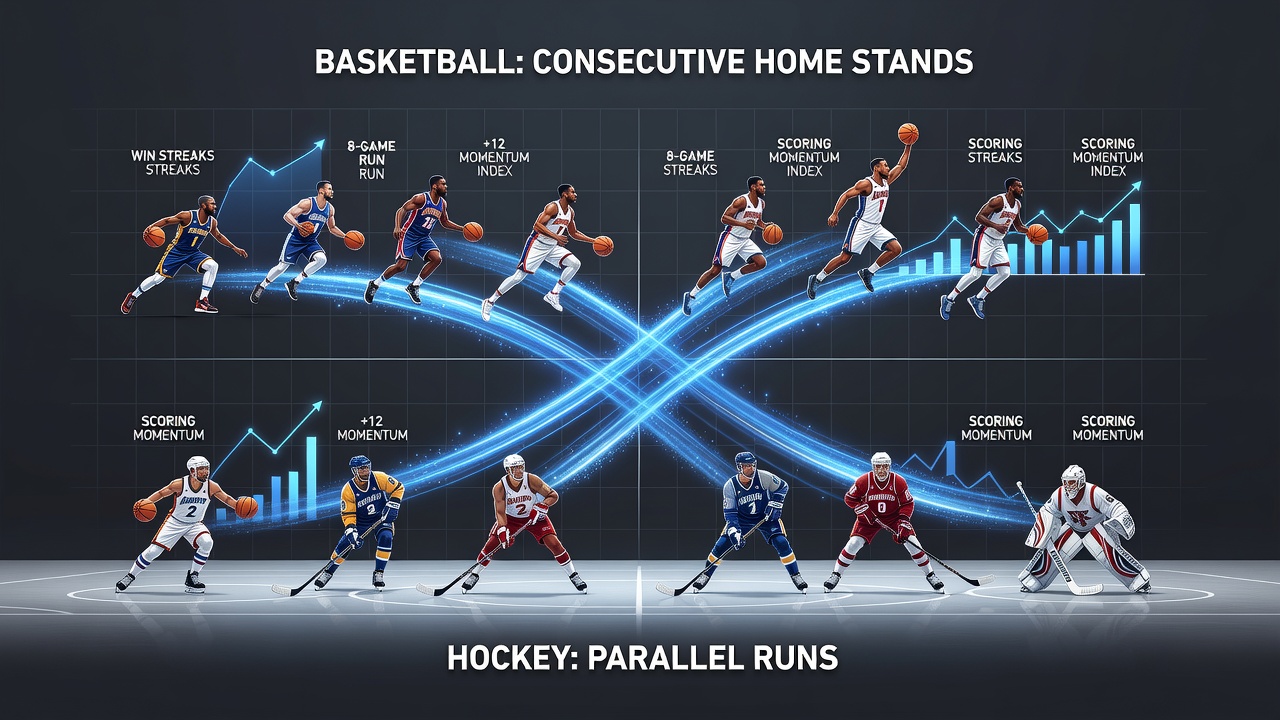
Researchers who examine simultaneous schedule windows find that NBA home-stand momentum often peaks on the same calendar dates when NHL teams complete comparable runs, particularly in November and March when both leagues maintain dense schedules. This temporal overlap allows bettors to layer selections by identifying dates when a basketball team on a three-game home stand aligns with a hockey club on a matching run, then combining those outcomes into multi-leg accumulators.
Figures from sports data providers show that such paired selections improve hit rates compared with standalone wagers, because the underlying rest and venue advantages operate independently yet follow similar statistical trajectories. Those who track these alignments also monitor injury reports and back-to-back burdens that interrupt streaks in either sport, because an unexpected rest day for key players can reset momentum before the stand concludes.
Applying Data to Layered Daily Wagers
Bettors construct accumulators by first isolating basketball teams entering home stands with favorable prior results, then cross-referencing NHL schedules for clubs in equivalent home sequences. Data indicates that pairing a basketball moneyline with a hockey puckline from aligned runs produces lower variance than random combinations, since both legs draw from comparable situational edges. Observers further note that adding a total or period prop from either sport extends the accumulator while preserving the core correlation.
Schedule density reports released ahead of the 2026-27 seasons highlight that August planning windows allow early identification of overlapping home stretches, giving bettors time to model expected streak lengths before lines open. Those models incorporate historical point differentials and goal differentials to project when momentum is most likely to sustain across multiple games.
Tracking Interruptions and Adjustments
League schedules contain natural breaks that end streaks, including travel days and national team windows, and analysts adjust accumulator construction when these interruptions appear. Evidence shows that teams returning from a five-day pause during a home stand post lower win rates than teams continuing uninterrupted sequences, which reduces the reliability of paired selections. Monitoring these resets keeps layered wagers aligned with current form rather than outdated momentum assumptions.
Conclusion
Cross-referencing NBA home-stand streaks with NHL run sequences provides a structured method for sharpening daily accumulator selections, and ongoing data collection through the 2026 season continues to refine these correlations for future use.