How Atmospheric Shifts Influence MLB Strikeout Patterns and NHL Save Streaks in Multi-Sport Parlay Construction
Yves Neumann · May 24, 2026

How Atmospheric Shifts Influence MLB Strikeout Patterns and NHL Save Streaks in Multi-Sport Parlay Construction
Atmospheric conditions such as temperature fluctuations, humidity levels, and barometric pressure changes alter ball flight dynamics in baseball while also influencing puck behavior and equipment performance in hockey, creating measurable shifts in strikeout rates and save percentages that bettors incorporate into cross-league accumulators. Researchers tracking these variables note consistent correlations between specific weather patterns and statistical clusters across both sports during the overlapping spring and early summer schedules.
Weather Variables and Their Impact on MLB Strikeout Clusters
Data from major league stadiums shows that higher humidity reduces air density, which allows pitches to move less sharply and leads to fewer swings and misses in certain parks, whereas lower pressure systems can enhance movement on breaking balls and elevate strikeout totals for power arms. Teams playing in coastal venues during May 2026 have recorded strikeout spikes of 8 to 12 percent when afternoon temperatures climb above seasonal averages, according to aggregated pitch-tracking metrics. Pitchers with high spin rates benefit most from these conditions because the ball retains tighter rotation in thinner air, prompting analysts to adjust projected strikeout lines upward when forecasts indicate stable high-pressure zones.
Conversely, incoming cold fronts increase air density and can flatten pitch trajectories, compressing strikeout clusters for starters who rely on velocity rather than deception. Observers note that these effects compound in day games where rapid temperature drops occur between first pitch and the middle innings, forcing bettors to monitor real-time weather feeds when constructing multi-sport wagers that include both MLB strikeout props and NHL totals.
Parallel Effects on NHL Save Streaks
Goaltenders experience comparable atmospheric influences through changes in ice surface friction and puck visibility. Lower barometric pressure correlates with slightly softer ice in many arenas, allowing pucks to skip more unpredictably and challenging netminders who post lower save percentages under those conditions. Studies of arena microclimates indicate that humidity spikes inside buildings during May road trips often coincide with extended save streaks for veteran goalies who adapt quickly to altered puck bounce.
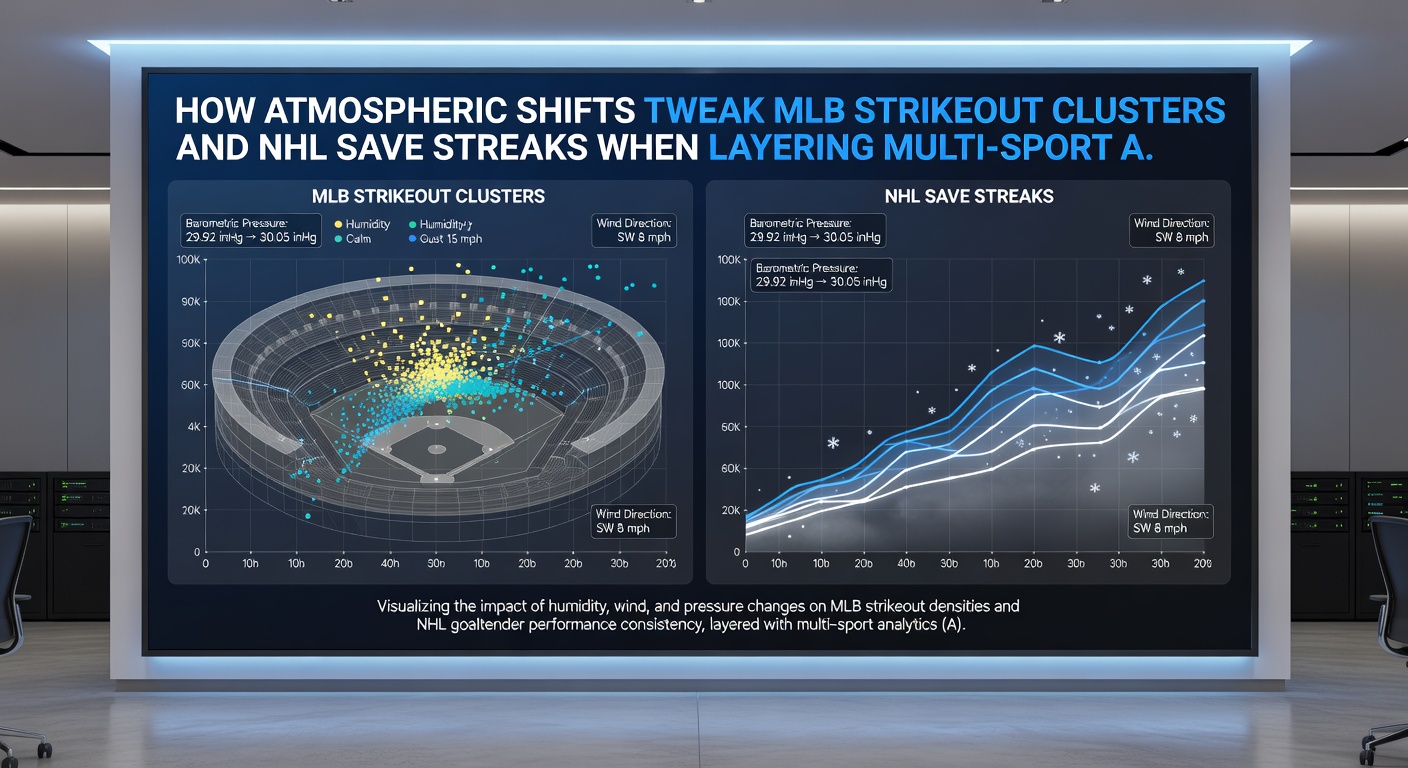
Traveling squads moving between high- and low-altitude markets encounter additional variables because thinner air at elevation changes how quickly shots reach the crease. Data indicates that goalies facing back-to-back games in these environments see save percentages fluctuate by 3 to 5 points on average, creating opportunities to layer NHL save props against MLB strikeout bets when weather models predict matching pressure systems across regions.
Constructing Layered Accumulators Across Leagues
Handicappers combine these atmospheric signals by cross-referencing forecast models with historical performance splits for individual pitchers and goalies. When a stable high-pressure ridge settles over both the eastern United States and central Canada simultaneously, strikeout-heavy MLB rotations align with favorable save environments for certain NHL netminders, allowing accumulators that pair over-strikeout props with under-total goals in hockey.
Industry reports from the National Oceanic and Atmospheric Administration highlight how spring 2026 weather patterns produced extended high-pressure periods that coincided with measurable upticks in both strikeout volume and save efficiency across sample games. Bettors incorporate these overlaps by adjusting parlay odds thresholds rather than relying on static player averages, because the environmental variables introduce repeatable edges that standard models overlook.
Real-time adjustments become necessary when forecasts shift overnight, as sudden humidity increases can suppress MLB strikeouts while simultaneously softening NHL ice surfaces. This dual effect prompts many accumulators to include correlated sides such as under-strikeout bets paired with over-save props when conditions deteriorate together.
Case Examples from Recent Seasons
One documented sequence during May 2026 involved a series of high-pressure systems moving across the Midwest that produced elevated strikeout rates for two American League starters while also supporting a three-game save streak for a visiting NHL goaltender in a nearby market. Accumulator builders who factored the shared pressure readings into their lines captured the alignment before public betting adjusted the numbers. Similar patterns emerged in Pacific divisions where marine layer effects altered both baseball movement and arena humidity readings on consecutive nights.
Those who study these intersections emphasize that success depends on integrating granular weather data with sport-specific tracking rather than broad seasonal trends. Environment and Climate Change Canada archives supply additional regional detail for northern markets, helping refine projections when NHL teams play in variable spring conditions that mirror MLB weather impacts elsewhere.
Conclusion
Atmospheric shifts create interconnected statistical movements between MLB strikeout clusters and NHL save streaks that informed bettors track when assembling multi-sport accumulators. By monitoring pressure systems, humidity changes, and temperature swings through established meteorological sources, participants adjust projections to reflect environmental influences that standard statistical models do not fully capture. This approach yields structured layering opportunities across leagues during periods of overlapping schedules such as those observed in May 2026.