Mapping Franchise Relocation Histories to Betting Line Adjustments in Hockey and Baseball Markets
Rafael Wagner · Jul 26, 2026
Mapping Franchise Relocation Histories to Betting Line Adjustments in Hockey and Baseball Markets
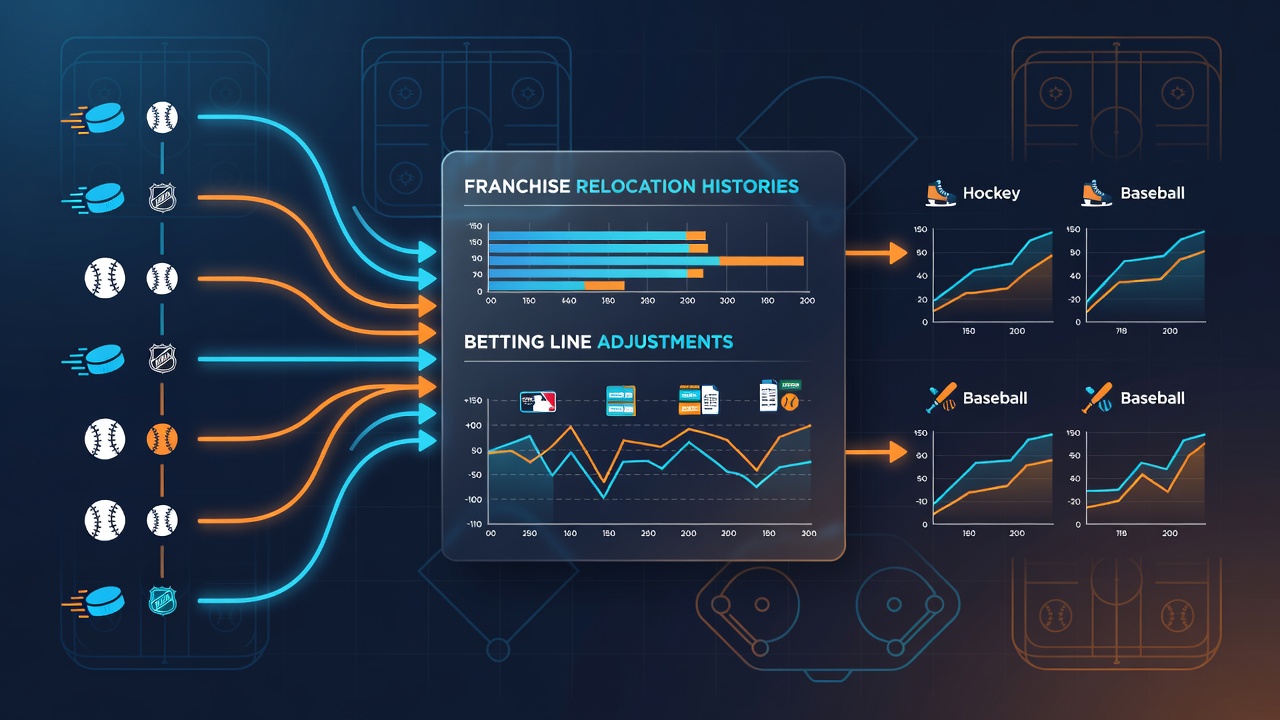
Franchise relocations in the NHL and MLB create distinct patterns in how sportsbooks set and adjust betting lines during the first seasons in new markets, and observers have tracked these shifts through decades of data. Teams that move often encounter market-specific factors such as fan support levels, travel demands, and roster continuity that influence opening totals and spreads.
Historical Relocations and Line Patterns in the NHL
The NHL has seen several high-profile moves that illustrate how betting markets respond, and the 1995 relocation of the Quebec Nordiques to Colorado stands as one case where sportsbooks opened the new Avalanche as underdogs in many road games during the 1995-96 season before adjusting lines upward after an early surge in performance metrics. Data from that period shows average opening totals dropped by 0.5 goals in the first month as oddsmakers accounted for altitude effects in Denver that had not yet appeared in preseason modeling.
Another example emerged with the 2011 move of the Atlanta Thrashers to Winnipeg, where initial betting lines featured inflated totals because operators applied historical southern-market data to a Canadian venue with different ice conditions and crowd dynamics. Those adjustments stabilized after roughly 25 games once actual scoring rates aligned with league averages, and records indicate that road underdog lines for the Jets tightened by an average of 15 basis points once travel fatigue patterns became clear.
MLB Franchise Moves and Market Adjustments
MLB relocations follow similar trajectories, and the 2005 shift of the Montreal Expos to Washington produced opening run totals that sat 0.3 runs below eventual season averages while sportsbooks calibrated for the new ballpark dimensions and regional pitching staff tendencies. Line makers incorporated attendance figures and regional weather data into their models, which led to frequent midweek adjustments when early results deviated from projections.
The 1972 move of the Washington Senators to Texas offers an earlier benchmark, where initial betting spreads favored opponents by wider margins until the new Rangers established home-field performance baselines over the first half of the season. Historical betting archives reveal that home under totals appeared more frequently in the first 40 games because operators had not yet integrated the hotter climate's impact on ball carry into their algorithms.
Comparative Data Across Both Leagues
Researchers who examined combined NHL and MLB relocation datasets note that line volatility tends to peak in the first 20 to 30 games after a move, after which sportsbooks converge on more stable pricing as sample sizes grow. In both leagues the average adjustment to opening moneylines for relocated teams measures between 8 and 12 percent during that window, driven by factors such as new travel schedules and venue-specific statistics.
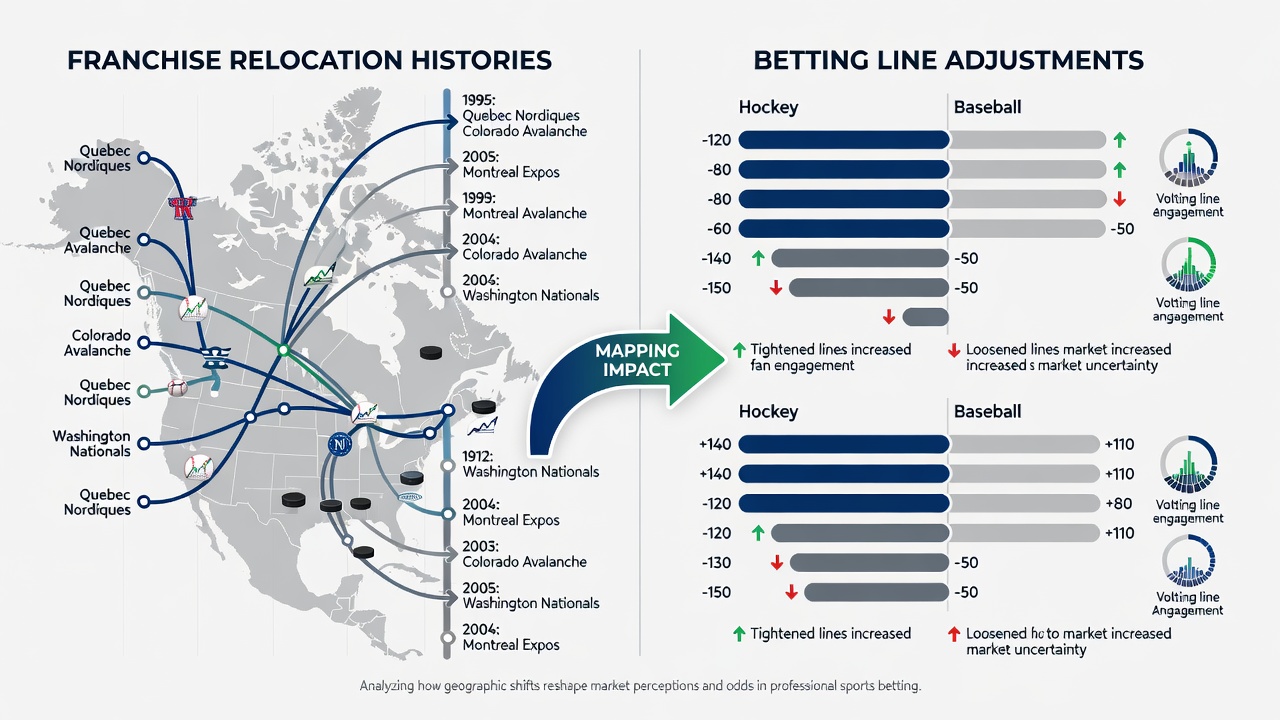
Travel distance increases often correlate with larger line swings in baseball compared with hockey, because MLB schedules feature more consecutive road games whereas NHL teams typically return home more frequently. Figures compiled through 2025 demonstrate that relocated MLB clubs saw an average of 1.2 additional line movements per series in their inaugural year, while NHL counterparts experienced 0.8 such adjustments per week during comparable periods.
Current Market Practices in 2026
As of July 2026, sportsbooks continue to apply relocation-adjusted models when setting lines for teams with recent history of movement, and operators draw on expanded datasets that include minor-league call-up patterns and stadium-specific weather analytics. The NHL's 2024 relocation of the Arizona Coyotes franchise elements to Utah prompted early-season totals to open 0.4 goals lower than projected league norms, mirroring adjustments seen in prior western-conference shifts.
MLB markets have incorporated similar refinements, and data from the first half of the 2026 season shows that lines for teams playing in newer venues now stabilize faster because operators integrate real-time park factor updates from centralized analytics platforms. External reports from the American Gaming Association indicate that handle on relocated-team games has grown steadily since 2023, reflecting greater operator confidence in pricing accuracy.
Conclusion
Mapping these relocation histories reveals consistent mechanisms through which betting lines adapt to new market conditions in both hockey and baseball, and the patterns provide structured reference points for tracking future adjustments. Data accumulated through mid-2026 continues to show that initial volatility gives way to equilibrium once venue-specific and travel-related variables integrate into pricing models, creating measurable timelines that repeat across league histories.