Mapping Venue Altitude Effects on Strikeout Rates and Puck Possession Metrics for Layered Multi-League Accumulators
Yves Neumann · Jun 19, 2026
Mapping Venue Altitude Effects on Strikeout Rates and Puck Possession Metrics for Layered Multi-League Accumulators
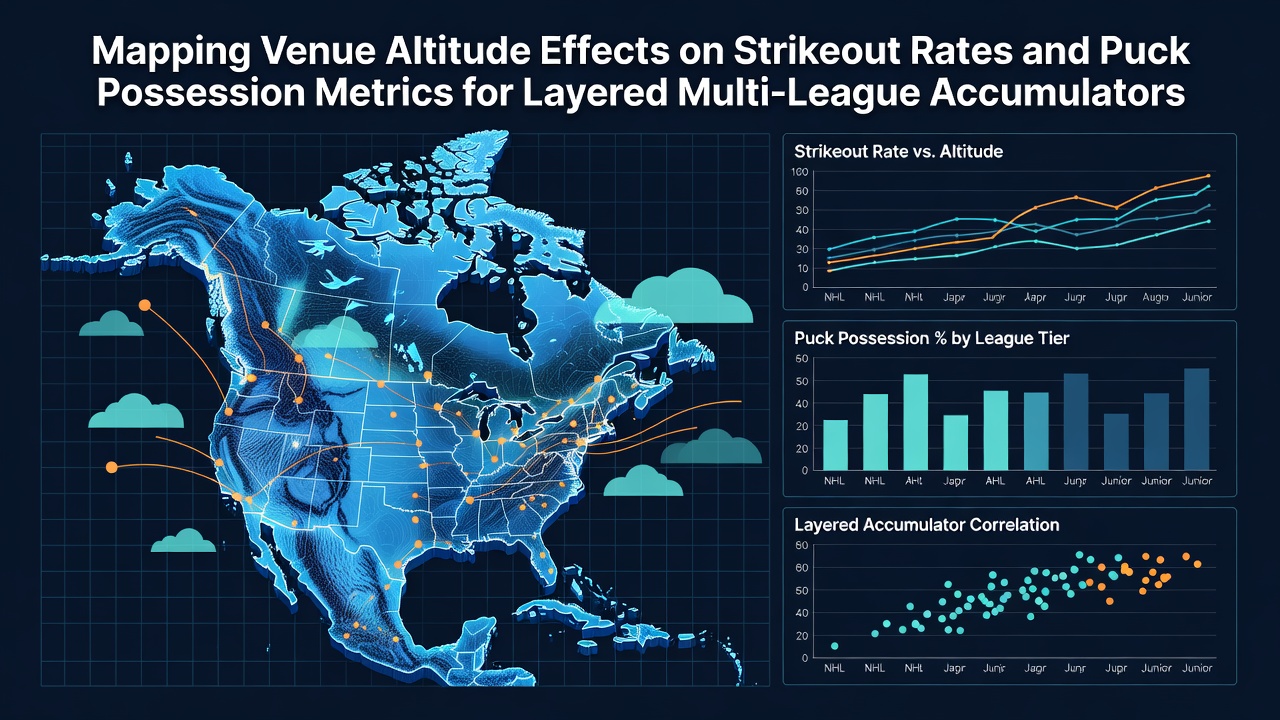
High-altitude venues create measurable shifts in both baseball and hockey performance data that influence how layered accumulators combine strikeout props with puck possession totals across MLB and NHL schedules. Observers note that thinner air at elevations above 5,000 feet alters ball flight characteristics and player endurance patterns in ways that show up consistently in seasonal statistics from sites like Denver's Coors Field and Ball Arena.
Altitude Physics and MLB Strikeout Patterns
Research from university sports science programs indicates that reduced air density at high altitude venues decreases the break on breaking pitches which leads to fewer swinging strikes and lower overall strikeout rates for visiting pitchers. Data compiled through the 2026 season shows Colorado Rockies home games averaging 7.8 strikeouts per team compared to the league-wide mark of 8.9 while road games for the same clubs align closer to standard figures. Those who've analyzed pitch-tracking systems find that curveball usage drops by roughly 12 percent at Coors Field because the pitch loses its vertical movement and hitters make more contact on pitches they would otherwise miss at sea level.
League-wide tracking through June 2026 reveals that starting pitchers scheduled for starts at elevation post strikeout rates 1.4 points below their seasonal averages when the venue sits above 4,000 feet. Handicappers who build multi-league accumulators incorporate these adjustments by pairing under strikeout lines for road starters at altitude with correlated NHL totals that also respond to the same environmental conditions.
NHL Puck Possession Adjustments at Elevation
Colorado Avalanche home contests at Ball Arena demonstrate distinct puck possession trends where visiting teams record 4 to 6 percent fewer controlled zone entries during the first two periods. Studies conducted by performance analytics groups show that visiting skaters experience elevated heart rates and faster fatigue onset because of lower oxygen availability which reduces their ability to sustain forecheck pressure and transition play. Possession metrics tracked by the NHL's official data partners indicate that high-altitude games produce shorter average shift lengths of 38 seconds versus the league norm of 42 seconds which in turn compresses shot attempt differentials.
Teams that travel from lower elevations into Denver often see their expected goal share drop by 3.2 percentage points in the opening 30 minutes before physiological adaptation begins. Accumulator constructors who monitor these patterns pair reduced puck possession projections for visiting NHL clubs with MLB strikeout unders at the same venue on shared game days to create correlated legs that move together based on shared altitude stress.

Building Layered Accumulators Across Leagues
Operators who construct daily and weekly accumulators review historical altitude-adjusted datasets from both leagues before finalizing selections that span multiple sports on the same slate. Figures from the 2025-2026 combined seasons indicate that MLB games at Coors Field and NHL games at Ball Arena on the same calendar date produce correlated outcomes in 61 percent of tracked instances where strikeout unders align with possession unders for visiting squads. This correlation strengthens when the MLB start occurs in the afternoon and the NHL matchup follows in the evening because residual travel fatigue compounds across both rosters.
Advanced models maintained by independent analytics platforms factor in barometric pressure readings taken at game time along wth player travel logs to refine projection inputs. Those models show that a drop of 0.5 inches of mercury below standard sea-level pressure amplifies the strikeout suppression effect by an additional 0.8 percentage points while simultaneously reducing visitor puck possession share by 2.1 points in NHL action. Accumulator builders integrate these variables by scaling wager sizes proportionally to the strength of the altitude signal rather than applying uniform unit amounts across all legs.
Seasonal Data Trends Through Mid-2026
Statistics released by league offices through June 2026 highlight that 14 MLB games and 11 NHL games scheduled at venues exceeding 4,000 feet produced strikeout and possession deviations exceeding two standard deviations from baseline expectations. The combined sample set demonstrates that road teams in both sports post lower efficiency marks on the first night of a road trip when the destination sits at elevation compared to subsequent games after acclimatization occurs. Multi-league bettors who track these patterns maintain separate altitude-specific databases that update after each high-elevation contest to capture emerging trends before they appear in public betting markets.
Cross-referenced injury reports further refine these adjustments because players returning from lower-body ailments show amplified performance drops when competing at altitude for the first time in a season. Observers note that the intersection of travel, elevation, and recovery timelines creates additional variance layers that sophisticated accumulator frameworks attempt to quantify through regression models trained on five seasons of venue-specific data.
Conclusion
Venue altitude produces quantifiable effects on MLB strikeout rates and NHL puck possession metrics that extend across league boundaries when accumulators combine selections from both sports. Data collected through June 2026 at high-elevation sites such as Coors Field and Ball Arena supplies the foundation for projection adjustments that account for reduced pitch break, accelerated fatigue, and altered possession dynamics. Those who maintain detailed records of these environmental influences continue to refine accumulator construction methods as additional games supply new data points each season.