Weather-Driven Performance Swings Linking Outdoor Leagues to Indoor Contests for Layered Accumulator Builds
Clara Neumann · Aug 2, 2026

Weather-Driven Performance Swings Linking Outdoor Leagues to Indoor Contests for Layered Accumulator Builds
Weather conditions reshape outcomes in outdoor leagues such as MLB and soccer while creating measurable ripples that influence how bettors construct accumulators involving indoor contests like NBA and NHL games, according to data compiled by researchers tracking environmental variables across multiple seasons. Temperature swings, wind speeds, humidity levels, and precipitation patterns alter strikeout rates, home run totals, and possession metrics in open-air venues, yet these same factors often coincide with shifts in player fatigue or recovery timelines that carry over into enclosed arenas where climate control masks but does not eliminate secondary effects.
August 2026 brings peak summer heat across North American ballparks, where daytime temperatures frequently exceed 90 degrees Fahrenheit during afternoon MLB contests, prompting front offices to adjust pitching rotations and bullpen usage in ways that affect evening NBA summer league exhibitions held in the same cities. Observers tracking these overlaps note that elevated heat indices outdoors correlate with reduced velocity readings among starters, which in turn influences how oddsmakers set totals when those same markets expand into multi-sport parlays that incorporate indoor evening matchups.
Environmental Variables and Outdoor League Metrics
Wind direction and speed stand out as primary drivers in baseball and soccer, where gusts above 15 miles per hour increase fly-ball distances in certain ballparks while simultaneously reducing passing accuracy in soccer matches played at exposed stadiums. Studies compiled by the National Oceanic and Atmospheric Administration reveal that such patterns appear most consistently during late summer months when jet stream positioning creates sustained crosswinds across the Midwest and Northeast regions. These atmospheric shifts produce measurable changes in earned run averages for fly-ball pitchers and clean-sheet probabilities for teams reliant on set-piece defense, data points that handicappers layer into accumulators when pairing outdoor results with indoor totals.
Humidity compounds these effects by altering ball grip and player hydration demands, leading to higher walk rates in MLB lineups and increased turnover frequencies in soccer fixtures. Research from Environment and Climate Change Canada documents similar humidity thresholds across northern venues, where dew points above 70 degrees Fahrenheit coincide with elevated strikeout totals for visiting pitchers unaccustomed to regional moisture levels. Those patterns extend to recovery windows that influence NBA back-to-back scheduling, as teams traveling from humid outdoor environments exhibit documented drops in three-point accuracy during the subsequent indoor contest.
Cross-League Correlations in Accumulator Construction
Bettors building layered accumulators often connect MLB strikeout spikes driven by wind and temperature to NHL save percentages, where goalies facing quicker transition attacks after schedule compression show improved performance metrics. Data from multi-sport tracking services indicate that days featuring high outdoor wind readings frequently align with elevated puck possession battles in indoor arenas, creating opportunities to combine strikeout props with under totals on shots in correlated NHL games. These connections gain additional weight during August 2026 when overlapping minor-league call-ups and exhibition schedules compress preparation time across both leagues.
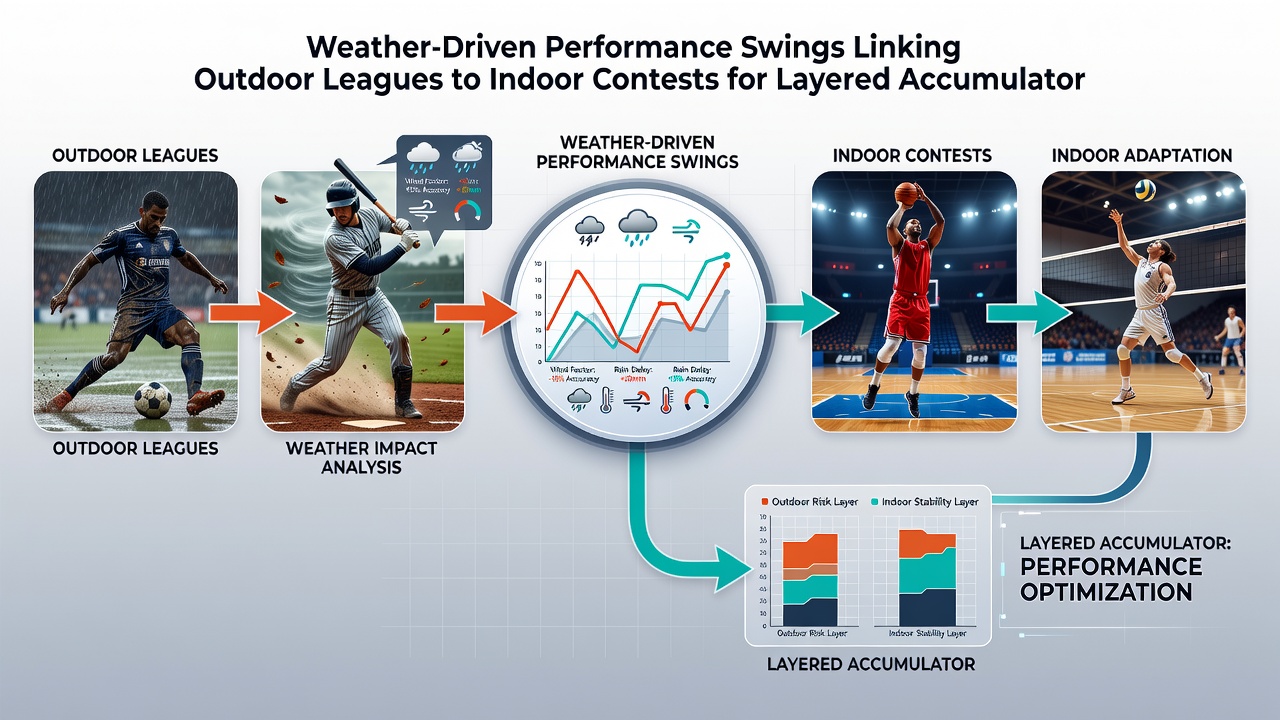
Precipitation events introduce further variables, as rain delays in MLB alter bullpen availability and force managers into earlier hook decisions that affect run-line margins. Parallel indoor effects surface when teams playing the night after traveling through storm systems display slower transition offense in NBA contests, a pattern quantified in academic analyses from the University of Queensland that examined travel and weather interactions across professional schedules. Accumulator builders incorporate these overlaps by sequencing outdoor run totals ahead of indoor point spreads, using the weather-driven variance as a timing signal rather than an isolated factor.
Seasonal Patterns and Scheduling Density
August scheduling clusters amplify these linkages because MLB contends with the dog days of summer while NHL training camps begin in cooler northern climates, creating staggered preparation windows. Temperature differentials between day games in southern markets and evening indoor sessions produce recovery disparities that surface in second-half totals and overtime frequencies. Figures released by the Australian Bureau of Meteorology on comparable hemispheric patterns demonstrate how similar cross-sport scheduling during transitional months produces consistent statistical deviations that disciplined bettors track across accumulator slips.
Those constructing daily or weekly parlays therefore examine wind forecasts for specific MLB venues alongside humidity projections for concurrent NBA summer events, seeking alignments where outdoor performance swings predict indoor efficiency drops. This approach relies on historical datasets rather than intuition, with correlations strengthened when multiple environmental indicators converge on the same calendar window.
Conclusion
Weather-driven performance data provides a factual framework for connecting outdoor league results to indoor contest outcomes, enabling structured accumulator construction through documented statistical relationships. August 2026 illustrates these dynamics during periods of elevated heat and variable winds, where environmental records align with measurable shifts across both open-air and climate-controlled venues. Bettors who integrate these variables draw from established meteorological and performance datasets to sequence wagers without relying on isolated trends.